

For sim racers seeking the ultimate cockpit setup, the high-end hardware bracket has long been dominated by two names: Pimax and Varjo. Varjo's XR-4 series represents the extreme pinnacle of enterprise simulation, commanding a staggering $3,990 entry price and targeting professional flight training and automotive styling studios.
At the same time, Pimax has just unveiled the Pimax Crystal Pro. Priced at $1,399, it delivers 2880×2880 resolution per eye, custom aspheric glass lenses, 120Hz refresh rates, and an uncompressed 60GHz wireless link that removes the cable completely without sacrificing image quality.
Does spending an extra $2,600 on Varjo's dual-cable enterprise headset deliver real lap-time gains on the sim rig? Or does the Crystal Pro offer the smarter, faster balance of clarity, ergonomics, and wireless freedom? Let us look at the telemetry and hardware details.
Price and Value: $1,399 vs. $3,990+
The financial reality between these two headsets is stark.
The Varjo XR-4 starts at $3,990 for the basic headset. If you want the Focal Edition with autofocus passthrough cameras, the price jumps to $9,990. On top of the hardware purchase, Varjo often requires recurring commercial software support subscriptions. That $4,000 could otherwise buy a top-tier direct-drive wheelbase, hydraulic pedals, and a motion platform combined.
The Pimax Crystal Pro starts at $1,399, or $1,899 for the complete 60G AirLink wireless bundle. There are zero mandatory subscriptions or software paywalls. Drivers get full access to Pimax Play, native OpenXR integration, dynamic foveated rendering, and firmware updates for life.
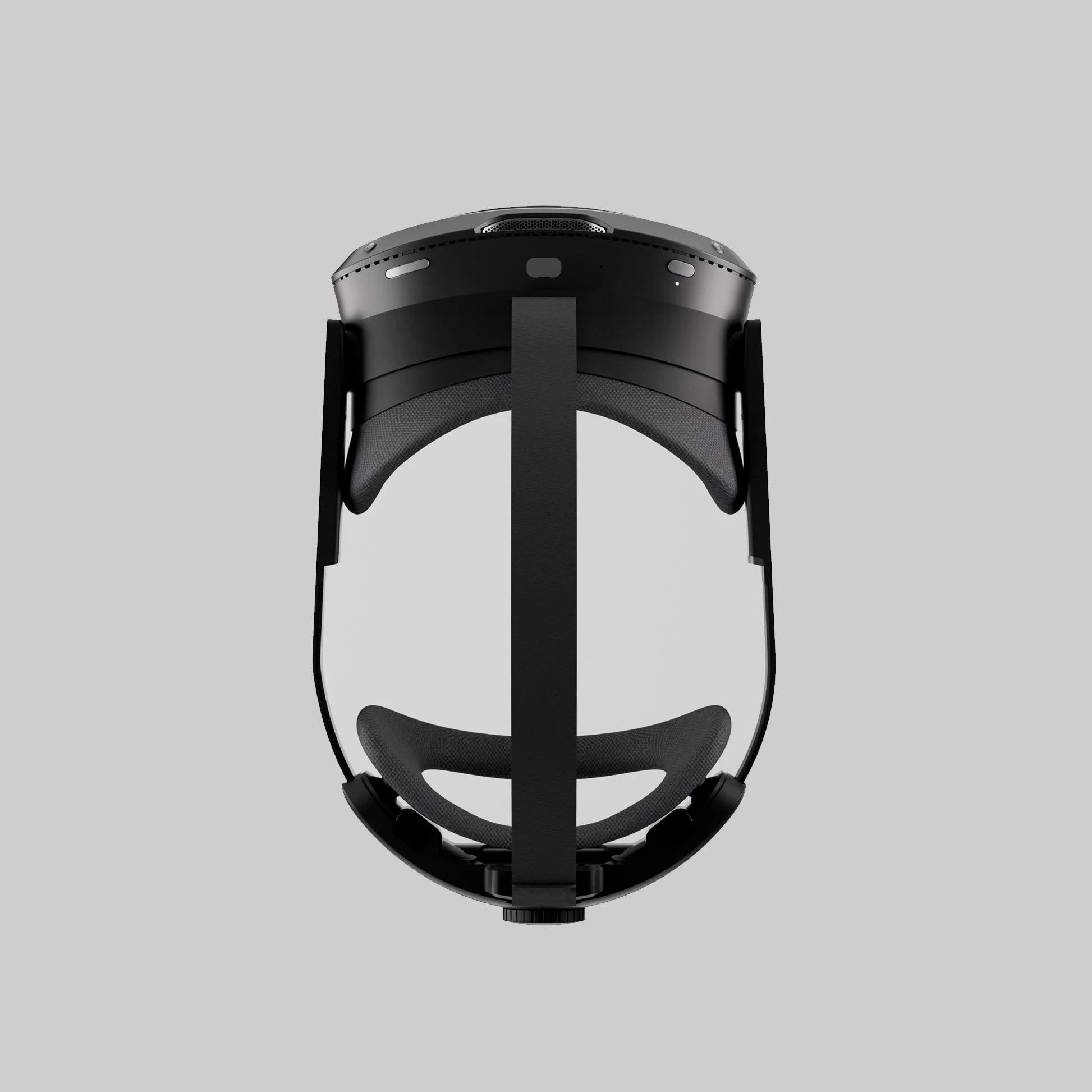 The Crystal Pro integrates glass optics and balanced strap ergonomics at a fraction of enterprise hardware pricing.
Cables vs. 60GHz Wireless Freedom
Rig cabling is an area where sim racers immediately feel the difference between consumer-focused design and enterprise equipment.
The Varjo XR-4 requires two physical DisplayPort 1.4 cables running straight into your PC graphics card, alongside a dedicated USB connection and an external AC power brick. These thick, heavy cables add significant pull to the back of your helmet and tie you firmly to the rig. If your graphics card has only two DisplayPort outputs, the Varjo takes both, leaving no physical ports for desktop monitors without using HDMI adapters.
The Crystal Pro offers the best of both worlds. With the 60G AirLink module, you can race completely wire-free. Its 60GHz 2x2 MIMO wireless link transmits raw, uncompressed GPU frames with under 2 milliseconds of latency. When you climb in and out of a tight formula-style cockpit, there is no umbilical cable to snag on your steering wheel or shifter. And when you enter an endurance event, a single DisplayPort 1.4a cable can be plugged in for unlimited battery-free runtime.
Visual Clarity, Refresh Rate, and Optics
Both headsets produce stunning visuals, but they approach display engineering differently:
- Varjo XR-4: Features dual 3840×3744 Mini-LED displays producing 51 PPD in the center sweet spot. However, it runs at a maximum refresh rate of 90Hz and demands extreme graphics hardware (often requiring enterprise RTX 6000 Ada or dual GPUs in commercial sims).
- Pimax Crystal Pro: Utilizes dual 2880×2880 QD-QLED panels with 576 Mini-LED local dimming zones per eye, delivering 35 PPD through replaceable aspheric glass lenses. Crucially for motorsports, it supports a high 120Hz refresh rate.
In sim racing, 120Hz provides smoother motion clarity when counter-steering a slide or judging the closing speed of a car beside you. While the Varjo has a slight edge in raw center text sharpness, the Crystal Pro's glass lenses provide a massive sweet spot, zero god-rays, and 33 percent smoother motion.
Hardware Specification Comparison
| Feature | Pimax Crystal Pro | Varjo XR-4 |
|---|---|---|
| Resolution Per Eye | 2880 × 2880 | 3840 × 3744 |
| Angular Resolution | 35 PPD (Glass Optics) | 51 PPD (Center Area) |
| Refresh Rate | 90Hz / 120Hz | 90Hz max |
| Wireless Capability | 60GHz mmWave Uncompressed | None (Strictly Wired) |
| PC Tether Requirement | Single DisplayPort 1.4a | Dual DisplayPort 1.4 Cables |
| Audio System | Modular DMAS 2.0 Off-Ear | Integrated Headband Audio |
| Retail Price | $1,399 ($1,899 Bundle) | $3,990 – $9,990 |
Pimax Crystal Pro Reservation
Secure early shipment priority and accessory discounts with a $1 reservation deposit. Stack verified partner code SRN at checkout for extra savings.
SRN
Software Optimization in Consumer Sim Titles
Varjo headsets run on Varjo Base software, which is engineered around industrial design tools and proprietary corporate pipelines. While it does support SteamVR and OpenXR, fine-tuning graphic settings in iRacing or Assetto Corsa Competizione can require registry adjustments, complex masking tools, and strict GPU driver configurations.
The Crystal Pro is supported by Pimax Play and native OpenXR runtimes that have been refined directly with sim racers over several generations. Built-in eye-tracking automatically enables foveated rendering across popular sim titles with a single checkbox, boosting frame rates by 25 to 40 percent on standard consumer GeForce RTX 4070, 4080, and 4090 GPUs.
Black Friday 2026 Speculation
Because Varjo operates strictly in the enterprise B2B space, you will never see a Black Friday consumer promotion or holiday bundle discount on the XR-4.
In contrast, Pimax offers extensive seasonal incentives. The Pimax Crystal Pro reservation queue is currently live for $1, securing launch priority and bundle discounts on the 60G AirLink receiver and DMAS 2.0 audio earcups. Entering coupon code SRN provides additional discounts on all headsets and accessories.
Frequently Asked Questions
Can a single consumer GPU run the Varjo XR-4?
Yes, an RTX 4090 can run the XR-4, but it requires two dedicated DisplayPort outputs on the graphics card, leaving limited ports for external triple-screen monitors.
Does the Crystal Pro require external tracking stations?
No. The Crystal Pro includes four integrated inside-out tracking cameras by default. However, sim racers with high-torque motion rigs can swap on the optional Lighthouse faceplate for SteamVR 2.0 laser base station tracking.
How does eye tracking compare between the two headsets?
Both headsets feature 120Hz integrated eye tracking capable of dynamic foveated rendering in OpenXR racing titles, concentrating maximum GPU rendering power directly where you look.
Final Verdict
The Varjo XR-4 remains a technical triumph for military simulators and industrial research labs with unlimited corporate budgets. However, its $3,990 price tag, dual-cable tether, and 90Hz refresh cap make it difficult to justify for a private sim racing cockpit.
The Pimax Crystal Pro provides a far better package for racers. Offering 35 PPD aspheric glass optics, a smoother 120Hz refresh rate, uncompressed 60GHz wireless streaming, and single-cable wired tethering at less than half the price, it delivers true high-end simulation clarity without enterprise penalties.
- Tremendous Value: Delivers 35 PPD glass optics at $1,399 compared to Varjo's $3,990 entry price.
- Faster Refresh Rate: 120Hz mode provides noticeably smoother motion than the Varjo's 90Hz limit.
- Clean Rig Cabling: Uncompressed 60GHz wireless mode or single DisplayPort tether replaces heavy dual-cable umbilicals.
- No Hidden Costs: Zero mandatory enterprise software maintenance fees or commercial subscriptions.
- Direct Sim Rig Support: Optimized for consumer OpenXR titles and RTX gaming GPUs right out of the box.