

Sim racing rigs take up a lot of room. Between aluminum extrusion frames, direct-drive motor mounts, triple-pedal decks, sequential shifters, and tactile transducers, finding floor space for a massive, full-tower gaming PC is an ongoing headache. Many small-form-factor PCs cut corners by using thermal-throttled laptop chips that struggle to keep frame rates steady when 40 cars enter Turn 1 in iRacing.
At Frontier 2026, Pimax revealed the Pimax Spation. It is a compact desktop PC engineered specifically for high-end virtual reality simulation, packing true desktop-grade components into a slim blade chassis no thicker than a dual-slot graphics card.
Desktop Silicon, No Laptop Compromises
The biggest difference between the Spation and typical mini-PCs is component selection. Pimax did not use soldered mobile processors. Instead, they built around full-wattage desktop hardware:
- CPU: AMD Ryzen 7 9800X3D (or equivalent). The 3D V-Cache architecture is the gold standard for sim racing, delivering rock-solid 1% low frame rates that prevent micro-stutters during heavy rain or packed starting grids.
- GPU: Configurable with an AMD Radeon RX 9070 XT or NVIDIA GeForce RTX 5070 Ti desktop graphics card.
- Memory: 32GB of high-speed DDR5-6000 RAM.
- Storage: 1TB M.2 NVMe PCIe SSD.
- Power: 1000W SFX internal power supply, providing plenty of headroom for peak power spikes during intense rendering loads.
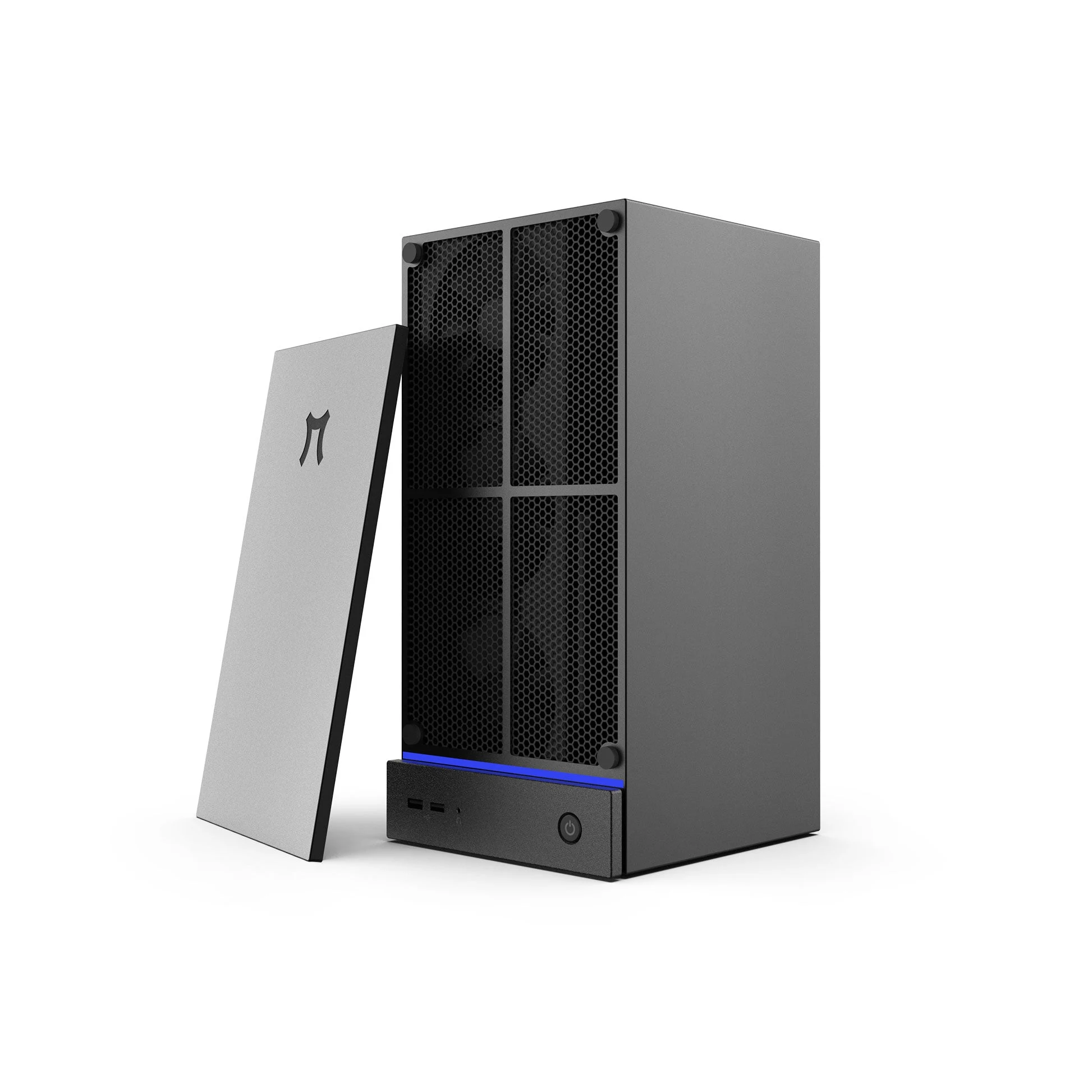 The rear I/O plate provides two DisplayPort 2.1 ports, HDMI 2.1, USB4, and high-speed 2.5G Ethernet.
Built for Microsoft Flight Simulator 2024 and Heavy Sims
During the launch event, Pimax engineers stated the exact benchmark the Spation was designed to hit: running demanding flight simulation titles like Microsoft Flight Simulator 2024 and packed sim racing grids in VR without dropping frames.
Driving in VR demands consistently high frame rates (72Hz, 90Hz, or 120Hz). A single frame drop or thermal throttle spike can cause instant motion sickness. The Spation features a high-airflow perimeter ventilation system that draws cool air straight across the CPU and GPU heatsinks, exhausting heat out the top edges so performance never throttles during endurance stints.
Next-Gen Connectivity: DisplayPort 2.1 and Wi-Fi 7
Modern VR headsets like the Crystal Super and Crystal Pro require immense display bandwidth. The Spation comes prepared with modern I/O:
- Two DisplayPort 2.1 Ports: Capable of driving ultra-high-resolution VR panels without display stream compression bottlenecks.
- One HDMI 2.1 Port: Ideal for connecting external 4K or 8K pit telemetry monitors.
- One USB-C DisplayPort 1.4a Port: For single-cable headset connections.
- One USB4 & Six USB 3.2 Gen 2 Ports: Plenty of USB connections for steering wheels, pedal sets, handbrakes, button boxes, and shifters.
- Network: 2.5G Ethernet, Wi-Fi 7, and Bluetooth 5.4.
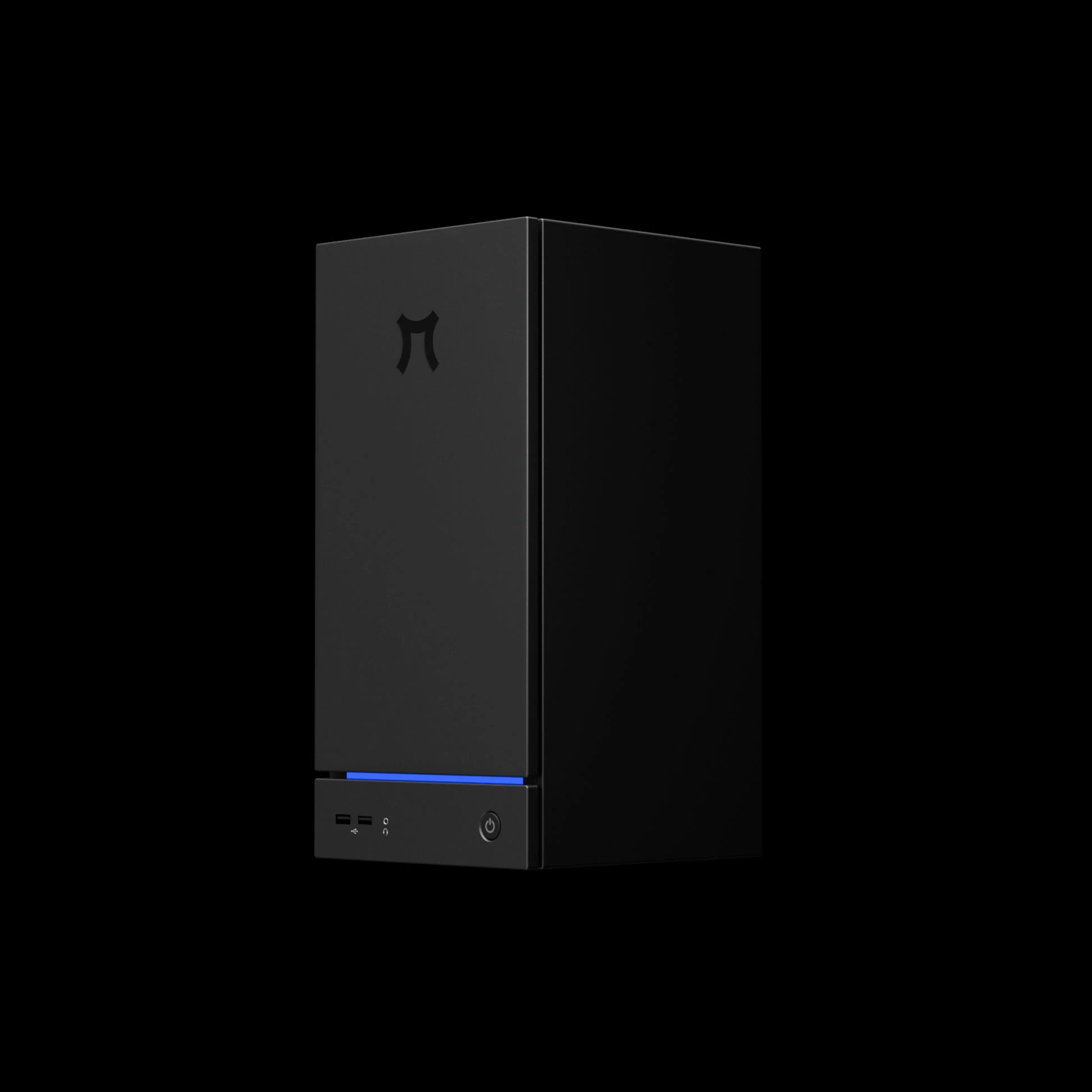 The slim blade chassis mounts easily onto aluminum extrusion rigs or sits cleanly on a desk shelf.
Windows, SteamOS, and Linux Pimax Play
The Pimax Spation supports both Windows and SteamOS. In addition, Pimax made a major software announcement: a dedicated Linux client for Pimax Play is in active development.
For racers who prefer building custom systems, Pimax is also offering a DIY barebones option. In the DIY configuration, Pimax supplies the Spation chassis, cooling, and power system, while you bring your own compatible motherboard and graphics card.
Pimax Spation Mini-PC
Desktop-class VR simulation power in a compact blade chassis. Sign up on Pimax store for availability and stack code SRN.
SRN
Black Friday 2026 Speculation
Pricing and exact launch dates for the Pimax Spation will be announced in upcoming months. As we approach Black Friday 2026, here is what sim racers should keep an eye on:
- Turnkey Sim Rig Bundles: High-end sim racers often look for turnkey packages. Pimax could introduce complete packages pairing the Spation with a Crystal Light or Crystal Pro at promotional rates.
- DIY Kit Pre-Orders: The barebones DIY chassis could see early holiday reservation waves, giving builders a compact home for their existing hardware.
- Discount Code Stacking: Official partner code SRN will apply to eligible store orders for extra savings at checkout.
Frequently Asked Questions
Can the Pimax Spation fit inside an aluminum sim rig?
Yes. Because the chassis is blade-shaped and no thicker than a dual-slot GPU, it can be mounted directly to aluminum profile frames or tucked under pedal trays, saving valuable room floor space.
Does the Spation come with an operating system installed?
No. Operating systems are not pre-installed, allowing users to install Windows 11, SteamOS, or compatible Linux distributions based on their preference.
Is the power supply inside the case or an external brick?
The Spation includes an internal 1000W SFX power supply, eliminating bulky external power adapter bricks.
Final Verdict
The Pimax Spation addresses one of the biggest friction points for PCVR racers: needing full desktop computing power without eating up half the cockpit footprint. By pairing high-performance AMD Ryzen 7 9800X3D silicon and desktop graphics with DisplayPort 2.1 in a slim blade chassis, it provides a purpose-built driving engine for the modern sim cockpit.
- Desktop-Grade Hardware: Full-power AMD Ryzen 7 9800X3D CPU and RTX 5070 Ti / RX 9070 XT graphics.
- Slim Blade Form Factor: Fits cleanly onto aluminum rigs or narrow shelves without bulky tower footprints.
- Next-Gen DisplayPort 2.1: Ready to feed massive display pipelines on modern Pimax glass headsets.
- Linux & SteamOS Support: Dual-boot capability with active Linux Pimax Play development.
- Holiday Watchlist: Sign up for launch alerts and prepare to stack partner promo code SRN at store.pimax.com.