

Two sub-200-gram Micro-OLED headsets have reached sim rigs this season: the Pimax Dream Air and the Big Screen Beyond 2. Both trim physical bulk down to the bone, but their performance profiles on track could not be further apart. The Dream Air brings an 8K Sony panel, native inside-out SLAM tracking, and integrated 120Hz Tobii eye-tracking. The Big Screen Beyond 2 sticks to lower-resolution displays, a narrow field of view, and a forced reliance on external SteamVR base stations. In direct testing across sprint races and two-hour endurance stints, the Dream Air runs away with the contest.

Pimax Dream Air
Sub-170g chassis, Sony 8K Micro-OLEDs, ConcaveView optics, inside-out SLAM tracking, and integrated Tobii eye-tracking.
View Dream Air
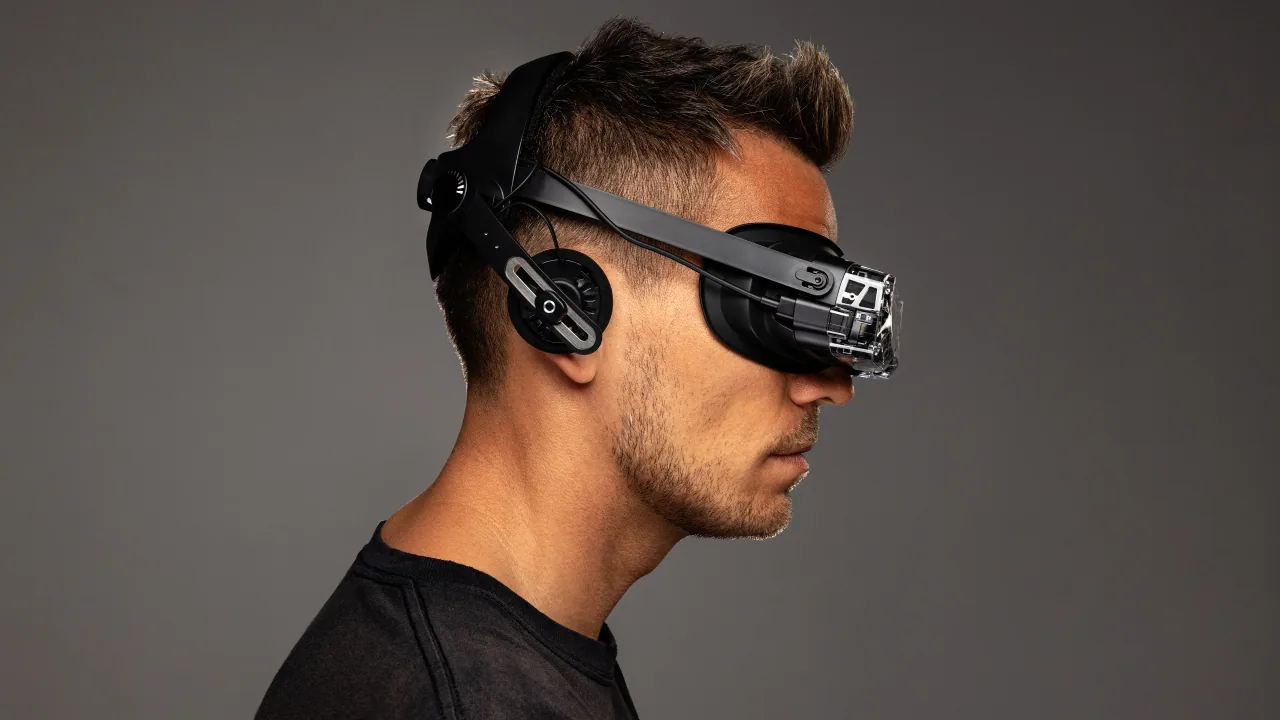
Big Screen Beyond 2
107g shell with 2560×2560 displays. Constrained by narrow FOV, external base station cables, and passive cooling.
Base Model TestedSpecifications Comparison
| Specification | Pimax Dream Air | Big Screen Beyond 2 |
|---|---|---|
| Display Type | Dual Sony Micro-OLED | Dual Micro-OLED |
| Resolution Per Eye | 3840 × 3552 (13.6MP) | 2560 × 2560 (6.55MP) |
| Total Resolution | 27.2 Million Pixels | 13.1 Million Pixels |
| Field of View (FOV) | 110° Horizontal (ConcaveView) | ~90° – 100° Horizontal |
| Optics | ConcaveView Pancake | Standard Pancake |
| Tracking System | Inside-Out SLAM (No Base Stations) | SteamVR Base Stations (Sold Separately) |
| Eye Tracking & DFR | 120Hz Tobii Integrated Standard | Optional Expensive Add-on ($$$) |
| Cooling System | Active Dual-Fan Micro-Ventilation | Passive Radiator Only |
| Audio Architecture | Integrated Spatial Audio Standard | Audio Strap Add-on Required (+$100) |
| Face Cushion Fit | Universal Quick-Adjust Gasket | Single-User Custom Face Scan (Zero Resale) |
| Base Turnkey Price | $1,999 USD ($1,959 with code SRN) | $959 (Shell Only) / $1,600+ Real Rig Cost |
Visual Acuity at Speed & 8K Pixel Density
Sony 8K Micro-OLEDs deliver 27.2 million pixels. Distance boards, Motec telemetry, and subtle track rubbering remain sharp at high speeds down long straights.
13.1 million total pixels. While clear in the center, distant 150m braking markers look softer, requiring you to get closer to the apex before numbers snap in.
When entering Turn 1 at Monza in a GT3 car at 165 mph, your braking point is a distance marker 150 meters down the straight. The Dream Air's Sony Micro-OLED panels run 3840 × 3552 pixels per eye, delivering 27.2 million pixels across the image. The pixel structure completely disappears. Yardage boards, track surface rubbering, and small dash Motec readouts—like brake bias and delta times—are sharp enough to read without shifting your focus.
The Big Screen Beyond 2 uses 2560 × 2560 per-eye displays, totaling 13.1 million pixels. That is less than half the pixel density of the Dream Air. At 150 meters, brake boards look soft and aliased. You have to wait until you are closer to the corner before the numbers snap into focus.
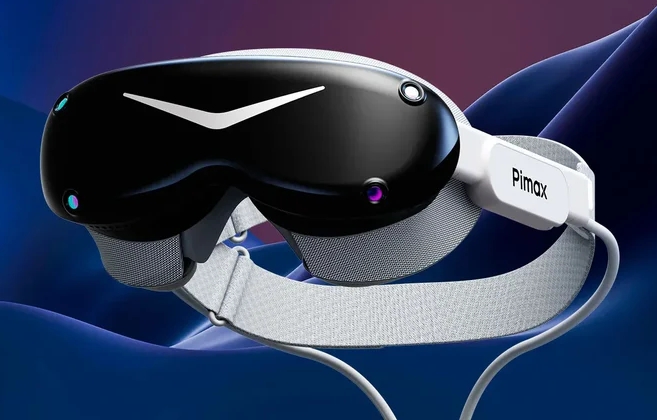
Dream Air Series
Featherweight comfort meets high-resolution optics. Tailored for endurance sim racing stints where neck fatigue is the enemy.
Field of View & Pack Racing Peripheral Vision
FOV is safety in online sim racing. Navigating a 30-car pack into Turn 1 requires seeing the front fender of the competitor alongside you in your peripheral vision.
The Dream Air uses custom ConcaveView optical elements delivering approximately 110° horizontal FOV (over 120° diagonal). You see side-by-side moves without constantly whipping your neck left and right. The Big Screen Beyond 2 delivers roughly 90° to 100° horizontal FOV depending on your custom face gasket. That narrow scope produces a scuba-mask effect, blinding you to competitors tucked under your rear quarter-panel.
Lens Nanocoatings & Night Stint Glare
Precision multi-layer optical coatings suppress internal reflections. Bright headlights behind you in the mirrors produce zero internal glare or hazing.
Standard pancake lens stacks create internal optical reflections when bright headlights cut through pitch-black cockpits during night endurance stints.
Rig Vibration Immunity & Active Micro-Ventilation
Rig Tracking: The Dream Air tracks through onboard inside-out SLAM cameras—no wall-mounted base station boxes required. High-torque direct-drive wheelbases (20Nm+) and haptic bass shakers send brutal vibration through aluminum profile rigs; the Dream Air's SLAM tracking ignores this vibration completely. The Big Screen Beyond 2 has no cameras and depends on external SteamVR base stations, leaving it vulnerable to tracking jitter when rig resonance vibrates room mounts.
Thermal Endurance: Forty-five minutes into an endurance stint, body heat accumulates inside any face gasket. The Dream Air runs active dual-fan micro-ventilation that continuously circulates fresh air across the lenses and exhausts heat out the top of the chassis. Your face stays dry and lenses never fog. The Beyond 2 relies on passive cooling, causing sweat accumulation and lens fogging in warm race rooms.
The Real Sim Rig Cost Breakdown
The Beyond 2's $959 sticker price is deceptive for a sim rig owner. To make it functional, you must purchase two SteamVR base stations ($300–$400), an audio headstrap ($100–$130), and SteamVR controllers for menu navigation ($150–$250). Real out-of-pocket cost quickly climbs past $1,600 USD—and you still receive lower resolution and no eye-tracking.
The Pimax Dream Air costs $1,999 USD ($1,959 with code SRN). That is a complete turnkey package: dual 8K Sony Micro-OLEDs, integrated high-fidelity audio, inside-out SLAM tracking, 120Hz Tobii eye-tracking, active dual-fan cooling, and controllers in the box. Dollar for dollar, the Dream Air is far superior hardware.
Final Verdict
While the Big Screen Beyond 2 deserves credit for its lightweight shell, its 2560×2560 resolution, tunnel-vision 90° FOV, passive heat buildup, and expensive base-station dependencies fall far short on a dedicated sim rig.
- 8K Visual Superiority: 27.2 million pixels make braking markers instantly legible at 165mph down Monza.
- Pack Awareness: 110° horizontal FOV provides critical peripheral vision for wheel-to-wheel battles.
- Vibration-Proof SLAM: No wall sensors, no tracking jitter from 20Nm direct-drive wheelbases.
- All-Inclusive Value: 120Hz Tobii DFR, active ventilation, and integrated audio in one turnkey chassis.