
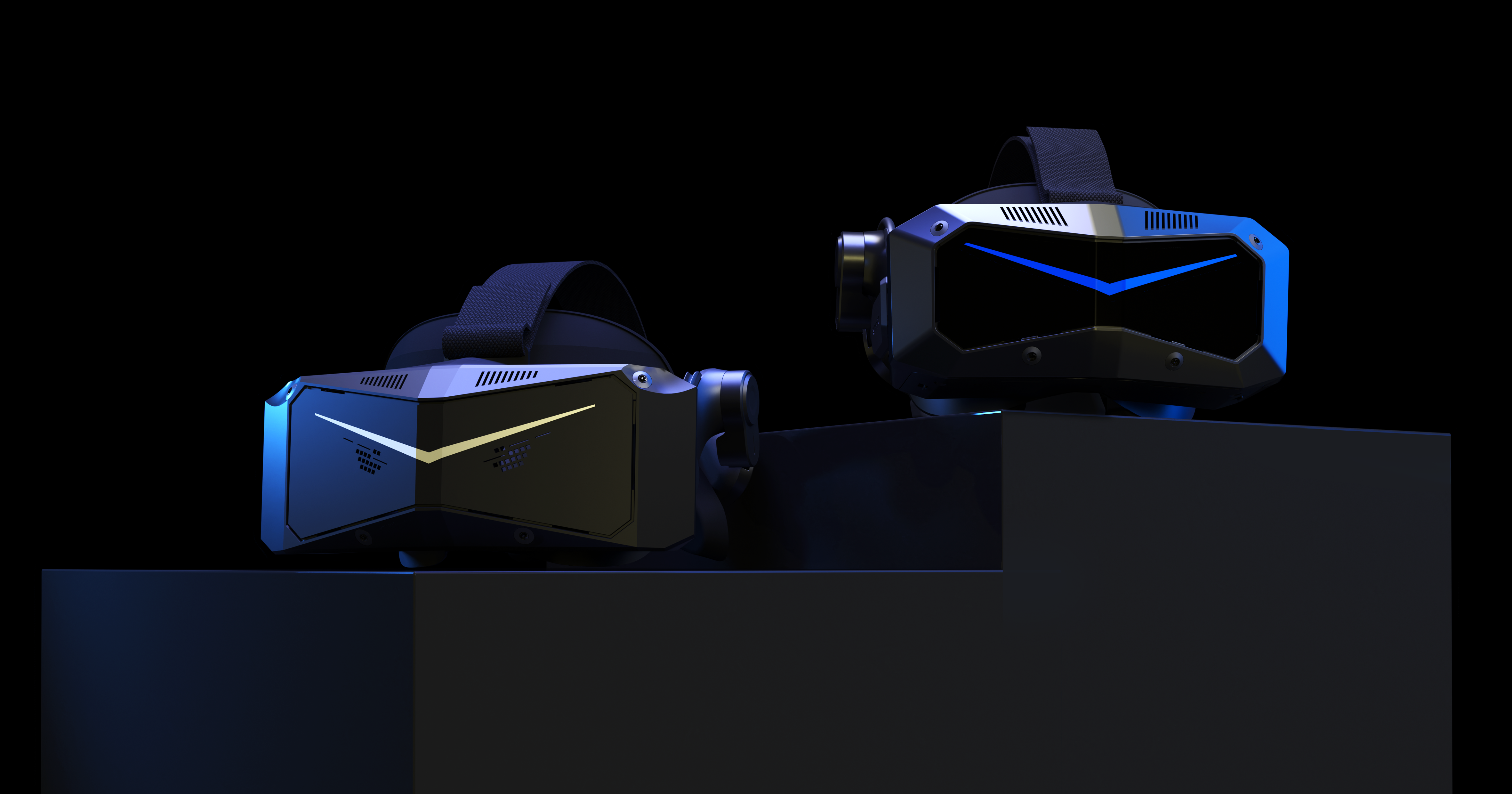
Pimax established two distinct tiers in the PCVR enthusiast space: the accessible, featherweight Crystal Light and the ultra-flagship Crystal Super. If you are preparing to upgrade your sim racing rig, choosing between these two headsets comes down to budget, target field of view (FOV), and GPU headroom.
Specs Comparison At A Glance
| Specification | Pimax Crystal Light | Pimax Crystal Super |
|---|---|---|
| Display Engine | Dual QLED Panels with Local Dimming | World's First Swappable QLED / 8K Micro-OLED |
| Resolution | 2880 × 2880 Per Eye (16.6M Total) | 3840 × 3840 Per Eye (29.5M Total) |
| Optical Density | 35 PPD | 50+ PPD (Micro-OLED Engine) |
| Horizontal FOV | ~120° Diagonal | Up to 130° Horizontal (Massive Peripheral Vision) |
| Weight Profile | Ultra-light (No battery, pure PCVR) | Premium Ergonomic Headstrap with counterweight |
| Price Target | Starting at $899 USD | Starting at $1,799 USD ($200 + 2% Off) |
Who is the Crystal Light For?
The Crystal Light is tailored for the pure sim racing specialist. If 90% of your VR time is spent inside iRacing, Assetto Corsa Competizione, or Automobilista 2, you want maximum clarity with minimum physical bulk on your head.
- No Battery Fatigue: Because it is a wired DisplayPort device, you never worry about batteries running out midway through a 6-hour endurance race.
- GPU Sweet Spot: Runs comfortably on modern mainstream enthusiast cards like the RTX 3080, RTX 4070, and RTX 4070 Ti without requiring aggressive foveated rendering tricks.
- Unbeatable Value: At $899 USD, it costs a fraction of the Crystal Super while providing higher clarity than virtually any other headset on the market.
Save with Sim Racing Nation Partner Codes
Use coupon code SRN during checkout on the official Pimax store for verified discounts across both headsets.
Who Needs the Crystal Super?
The Crystal Super is intended for simulation drivers with top-tier rigs (NVIDIA RTX 4080 Super or RTX 4090) who crave absolute immersion and zero visual compromises.
- Wider Peripheral Vision: The expanded 130-degree horizontal field of view lets you spot cars diving up your inside without moving your neck, simulating real-life peripheral awareness.
- Swappable Optical Engines: Swap between a high-brightness QLED engine with local dimming for daytime track sessions, and an 8K Micro-OLED engine with infinite contrast ratios and true inky blacks for Le Mans 24h night stints.
- 50+ PPD Visual Acuity: Completely eliminates the "screen door effect" forever. Distant apexes, pit exit cones, and tire marbles look like reality.
Final Verdict
If you have an RTX 4070 or RTX 4080 and want the best price-to-performance headset for competitive sim racing, buy the Pimax Crystal Light. If you run an RTX 4090, participate in high-stakes endurance leagues, and demand maximum FOV with OLED black levels, invest in the Pimax Crystal Super.